

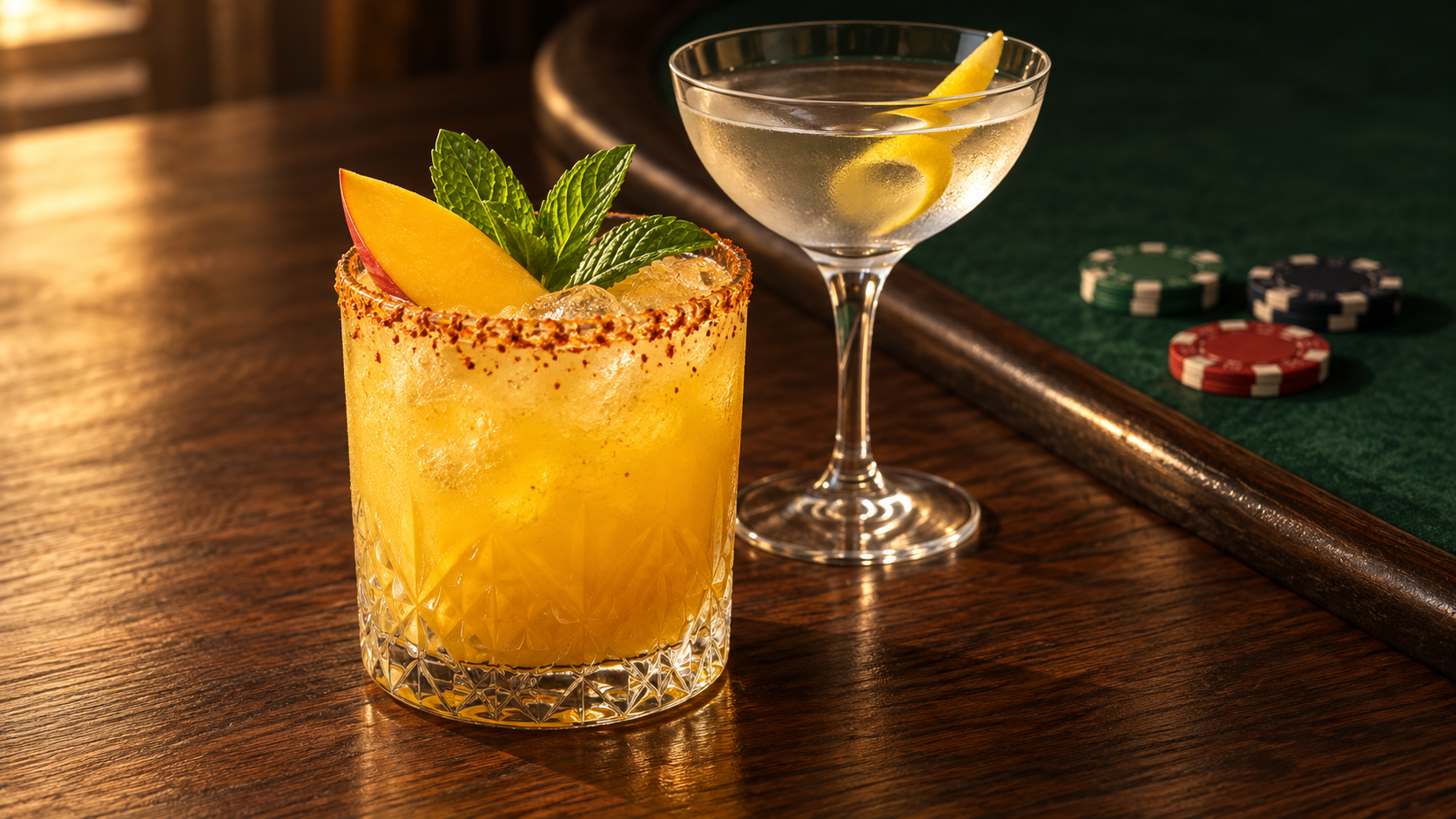
James Bond’s Vesper is often mistaken for a vodka Martini, although gin is its main spirit. Its casino connection comes from a specific story and a specific drink order. For someone choosing refreshments for casino entertainment at home, that history offers a reference to draw on. It doesn’t prescribe what belongs in every glass or make an alcohol-free choice any less suited to the occasion.
In Ian Fleming’s 1953 novel Casino Royale, Bond specifies gin, vodka, and Kina Lillet, finished with lemon peel. The drink becomes the Vesper, named after Vesper Lynd. Delish’s account of the Vesper Martini connects that literary history with a contemporary version using Lillet Blanc. The name survives, even as the ingredients used to make the drink can differ from those in Fleming’s original description.
A casino occasion, a personal order
Bond’s exacting order gives the casino setting a recognizable drinking ritual. He specifies ingredients and preparation, instead of leaving the choice to the person serving him. That makes the Vesper a natural reference for someone interested in casino fiction. It does not establish a shared preference among actual casino players, whose reasons for choosing a drink need not have anything to do with the character.
At home, there is room to borrow as much or as little of that ritual as suits the evening. Adults who join Cafe Casino and play online choose their own refreshments alongside the games. A Vesper can supply the literary reference, while a beer or an alcohol-free drink can simply suit the person playing. The drink can mark the occasion through its name or presentation, while its ingredients follow an entirely different preference.
A drink chosen for the occasion still deserves the same attention as one ordered at a bar. Its name can suggest a mood or a story, but the useful questions concern what is in it, what it tastes like, and whether that is what you want.
The Vesper has an identity of its own
In Fleming’s original order, gin has the larger share. Its juniper character is part of what someone expecting a predominantly vodka cocktail might overlook. Remembering the Vesper as a gin-led drink gives a more accurate starting point for understanding its flavor, even before considering the other ingredients or how it is served.
Lillet Blanc is a wine-based aperitif, a drink traditionally served before a meal. It brings floral and citrus notes alongside the gin and vodka. The Kina Lillet named by Fleming was more bitter, with quinine, the bittering ingredient also used in tonic water, contributing to its character. A modern Vesper made with Lillet Blanc should be understood as that version, rather than promised as an exact reproduction of every historical ingredient listed in the original 1953 novel.
A long-stemmed cocktail glass and a lemon peel garnish may recall the familiar image, but they do not establish the drink’s identity. A photograph can show the presentation while leaving the contents uncertain. Reading the accompanying description gives a clearer idea of what to expect than recognizing the glass alone.
Preparation is a separate question. Shaking and stirring affect dilution and texture; neither tells you which ingredients went into the glass. The Vesper’s association with shaking follows the order in the novel. A drinker can appreciate that detail while still having a preference about how a cocktail feels and tastes.
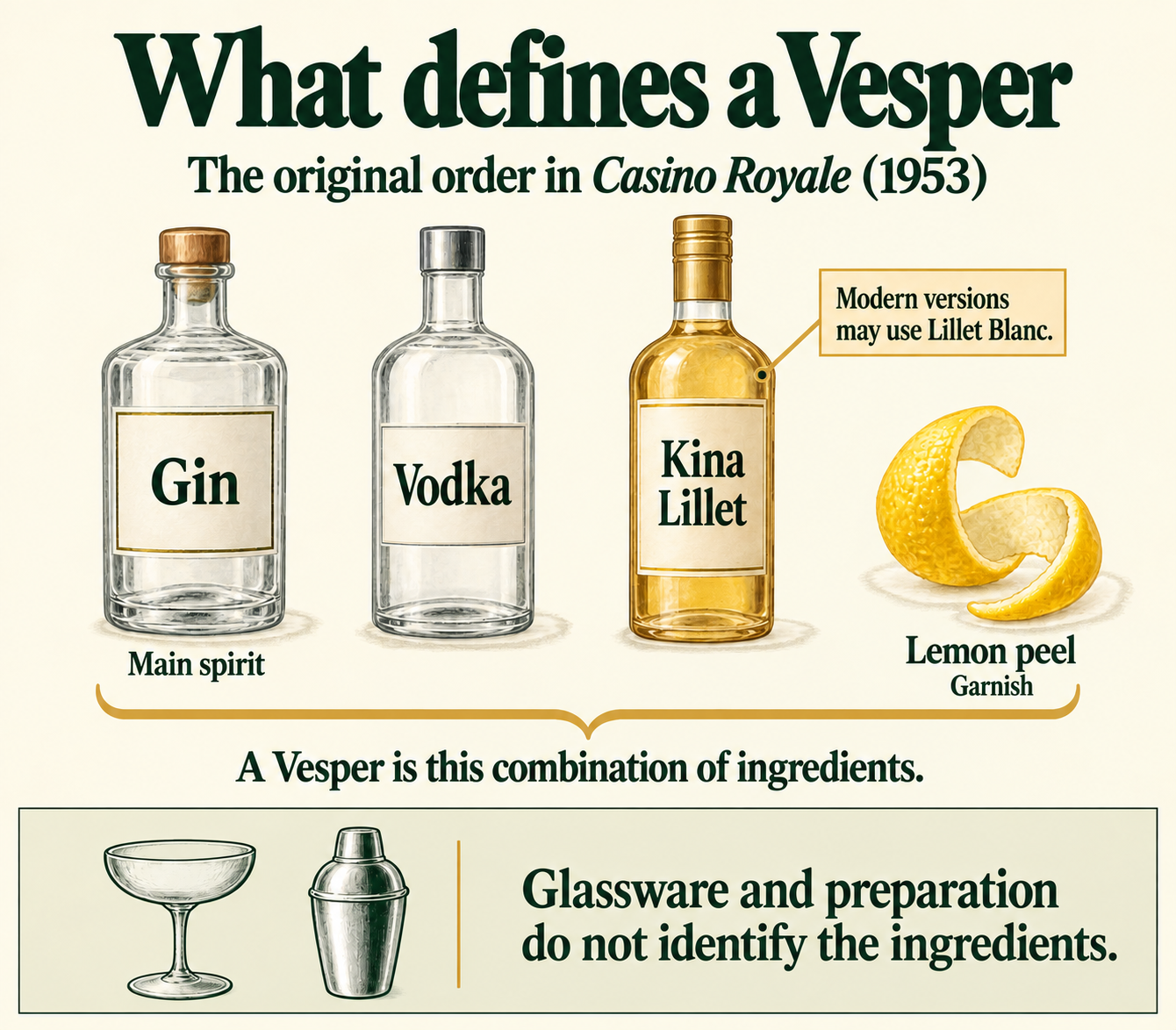
Vesper ingredients distinguished from glassware and preparation, with Lillet Blanc noted for modern versions
This leaves a useful distinction between a named cocktail and a themed drink. “Vesper” gives someone serving it a particular composition to work from. “Casino-inspired” allows a much broader interpretation. The latter description can belong to a drink with fruit, a seasoned rim, or no spirits at all, without making it a substitute for the Vesper.
An alcohol-free drink with a different reference
The Oasis Dreams Agua Fresca Recipe, published by Cafe Casino, describes a golden mango-coconut drink with a Tajín rim, inspired by Oasis Dreams. The ingredients include mango, coconut water, and fresh lime juice, with mango slices and mint sprigs listed as the garnish.
With fruit and coconut water at its center, it starts from a different set of flavors. Fresh lime and the seasoned rim give it depth and interest. Its own name is more informative than calling it an alcohol-free Vesper, which would create an expectation of a drink modeled on gin, vodka, and Lillet.
Alcohol-free drinks also need not begin as replicas. PUNCH’s discussion of nonalcoholic classics distinguishes bartenders recreating familiar cocktails from those developing drinks outside established templates. Replication can involve matching a familiar texture or bite. An original drink can begin with other ingredients and expectations.
Portland bartender Lydia McLuen’s Queen Garden Swizzle, featured in the same piece, uses a nonalcoholic botanical spirit, umeboshi plum vinegar, and chilled mint tea. Vinegar supplies acidity, and the tea contributes another layer beyond a straightforward spirit replacement. Those ingredients give the drink something to describe beyond the absence of alcohol: a botanical base, tartness, and the character of mint.
For a casino evening, the Vesper offers a particular cocktail with a literary history. The agua fresca offers fruit, citrus, and a seasoned rim under its own name. A familiar reference can help you choose, but it should also set accurate expectations: ordering a Vesper and choosing a drink for casino entertainment are different requests.