

Interview: Josh Pfriem on the future of beer; flavors, style and evolving consumer
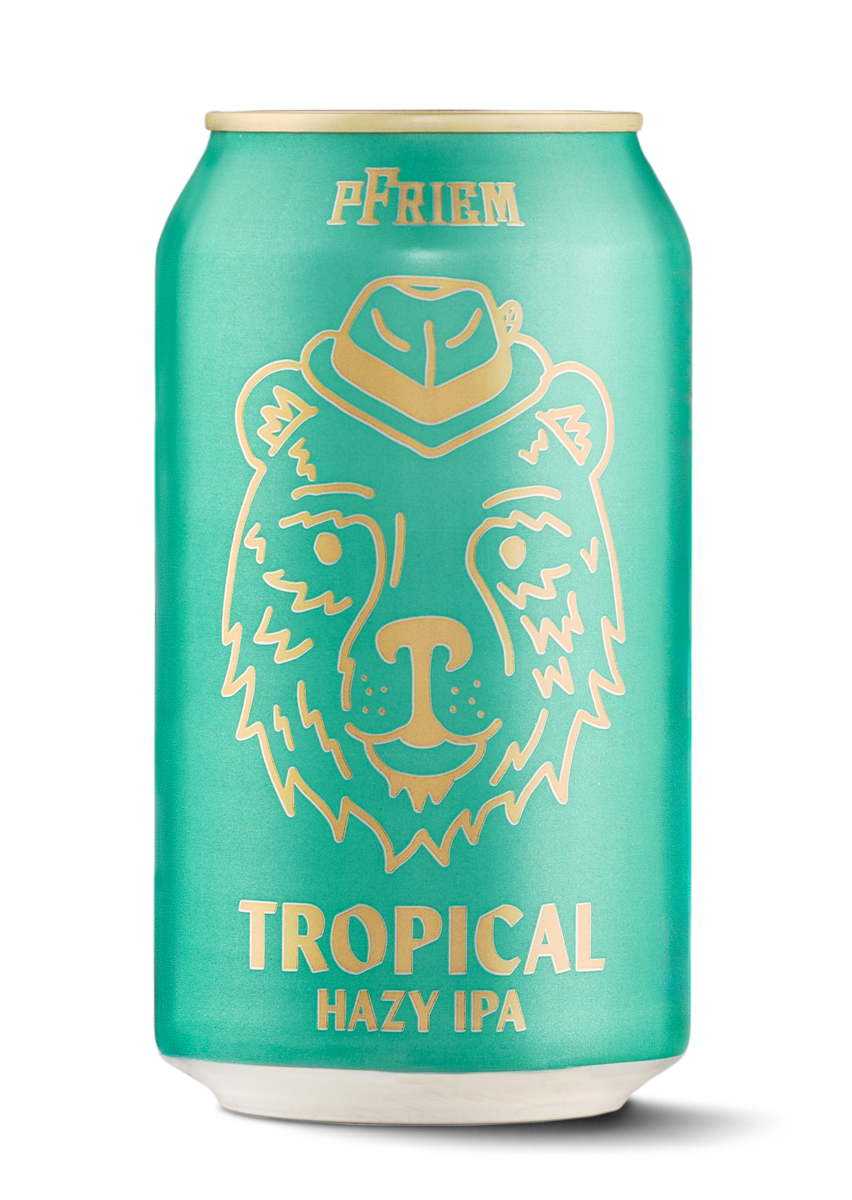
pFriem Family Brewers, a northwest brewery based in Hood River, Oregon with production and barrel facility in Cascade Locks, recently unveiled their 2026 beer lineup and new year-round beer Tropical Hazy IPA. Founded in 2012, pFriem has built a reputation for balance-driven beers in old world European styles as well as contemporary popular American styles and trends. Their newly unveiled beer lineup reflects the shifting demographics and evolving flavors palates and demands of consumers, and warranted a deep dive into those trends. Following up with the recent announcement of their new Tropical Hazy IPA, and a notable turn towards tropical flavors both at pFriem and more broadly in craft beer, cider, seltzer, and beyond we caught up with co-owner/Brewmaster Josh Pfriem for an in-depth discussion on the current trends and flavors.
The following interview has been transcribed and lightly edited for clarity and brevity.

pFriem’s new 2026 core beer lineup
Q: I was analyzing pFriem’s new 2026 beer release calendar and noticing a lot of changes. The core year-round lineup has really grown to a lot of flavors now with the addition of West Coast IPA, Japanese Lager, and now the new Tropical Hazy IPA.
Josh Pfriem (JP): We don't just build a pipeline to fill it, but growing as a regional brewery with more shelf space comes more opportunity, and also just more more flavors for more occasions. We're pretty proud of where our our whole lineup is hit hits on a lot of different drinking experiences. One thing we look at is who's drinking? Why? What are we excited about? When we look at the depth of the consumer right now. We're probably one of the, if not the largest breweries in the US that only makes beer. So we have a pretty tight, narrow beer offering. And so wanted to play around something a little bit more youthful, a little more fun. I think craft beer can sometimes be fully aware of itself, but other times can have the blinders on to who's drinking what. We've had a lot of fun with our foray in our tasting rooms with cocktails and Tiki fruit flavors and just the realm of fruit is different than it was even five years ago. What you can do with the beer and just different types of products and offerings that you could put into beer in different ways. I think when we look at our portfolio, if you had told me five or six years ago that in 2026 one of our faster growing brands would be hazy IPA I would have been pretty surprised. But you know that that when hazy IPA became like a thing on the East Coast and started trickling to the West Coast we thought we would take our time. Then we were like ‘we make all kinds of different beers why wouldn't we lean into this as well?’ we don't have to do it the way that everybody else does it, we can take a fresh approach. It's been cool to see how much that beer is enjoyed by beer lovers, but also more youthful drinkers, by female drinkers, and maybe future pFriem Pilsner drinkers. One of my favorite things I hear when we’re just talking to people at a beer event or wherever out in the world in public, is that so many partners and couples that are both pFriem drinkers have a 6-pack of Pilsner and a 6-pack of pFriem Hazy IPA in their fridge. So we wanted to expand on some of the diversity of that and that's where we got excited about making a very tropical focused and fruit expressive beer beyond our current hazy IPA. But also to lean into drinkability and complexity. People are pretty excited about fruit flavors, of tropical flavors. So that's kind of the journey of how we got here.
Q: Consumer tastes change, demographics change, and even how we define beer styles change. What do you think people want right now?
JP: From my journey being in craft beer for almost 20 years. I think what's cool is it's an evolution. It's never been static. It's always evolving. And I think we have two things happening right now: You have a lot of modern pushes in beer like this tropical, hazy, we're using new tools that we didn't have a couple years ago to find new expression flavors based upon modern palates that people are ready for now. But then also at the same time we are seeing a resurgence of some classic styles. Five to eight years ago, you could probably barely sell an amber ale or a stout. People just weren't into them, but now they're coming back, which is great to see, like, malt, nutritional flavors and color back again. And its from a modern perspective, not an early 2000s perspective or late 90s. So it's had their time and place but now they’re made with modern brewing techniques and modern ingredients. It's cool to see that both can live along one another.
Q: I want to go back to one thing you said earlier about the beer industry being self aware sometimes and having the blinders on other times. Can you elaborate on that?
JP: Yeah, I think we're in an era that we need to be aware of a diversity of palates and beer drinkers or whatever people are into, whether cocktails, wine, a whole array of spirits. It’s a world of flavor out there, which I think is why a lot of us got into craft beer. We want flavor, but I think sometimes we look through the lens of what we thought flavor was in terms of beer, just, you know, 15 to 20, years ago, there's nothing wrong with traditional I mean Pilsner is almost half of what we make. We love traditional beers with a new wave approach, but also we've always been up for innovation and playing with the palate in different ways. We want to make sure that we're creating different flavors and creating new opportunities, while we keep our focus tight on beers like Pilsner and Japanese lager, West Coast IPA that I find the heart of the craft beer drinker but also try to make other things that might attract more folks, and we are excited about that as well.
Q: Ranking the best selling of the core offerings is it Pilsner one and the Hazy IPA two or three?
JP: Pils is one by far, and then it’s pFriem IPA and then a pretty close tie for second with Hazy IPA and West Coast IPA. And then Helles (gold can lager) is pretty close to that and then pale ale and Japanese lager.
Q: You'd have to be like, not paying attention to not notice tropical flavors in hops have been growing for like a decade now atleast. But more recently I have really noticed beers using “Tropical” this or that in the name, and tropical versions of existing beers. How do you make the determination that is what consumers are looking for? Is just customer feedback, or is it sales? Or have you seen any like studies or anything like that that lead you to believe that tropical is the way to go?
JP: We're not an IRI data brewery in that we are looking at past data to make a bunch of future decisions. But we do look at IRI data and we read a lot, we look at national trends, we look at other beverages, and also what we're excited about and what new tools there are to work with. But yeah, as you said, you have to be taking a long nap to not notice that people love tropical flavors. Even with our house cocktails it is a pretty big emphasis on tropical flavors. We use a lot of different flavors, but definitely love the tropical flavors. Ithink that it's a very attractive to a wide range of people, I think especially the youthful palette. You know that big sweet, big acid, loud and flavorful is pretty fun. I definitely spend a good amount of time when I can, going into places that are tropical. And I'm always after whatever the freshest domestic beer is wherever that tropical spot is, whether it's just eating tropical fruit or tropical flavors, there's such an inspiring world there. And as you said, we've been chasing tropical flavors out of hops and trials for a while now, and we have new tools to turn those up. It is really kind of a fun foray for us to play around with that. But back to your question, I know we're definitely not the only people to do this and its not novel, I but I think for us it's unique because it's a little different than what we have offered before and we think it's a fun opportunity to tap into.
Q: For awhile there, and actually probably still, there was the people using the term “juicy” for IPA, which I don't think really ever had a real definition but seemed to be a code word for a tropical IPA with hazy-like characteristics, but not necessarily the hazy color and mouth feel. Does that seem like an accurate description to you? And is this kind of a close equivalent to that?
JP: From my perspective juicy was close to hazy IPA, but maybe a little more drinkable, a little bit less like a milkshake especially those early versions when people were still trying to figure it out. I would say just like cold IPA or West Coast Pils is very different than what we used to call them India Pale Lagers (IPL) you know? I know there's some people that hold on to that they're the same thing. I'm like, those that is not the same thing. We’ve kind of evolved, its a different, more nuanced world. We’ve went through an array of different hazy IPAs, from big, thick milky ones, that are higher in alcohol, super heavily hopped, way more turbit, to on the other side our classic Hazy IPA which is hazy but not like crazy high in alcohol, but big in flavors but meant to be easy to have a couple of them. We've looked at all the things that we've done with hazy IPAs and think we can really build a nice base that'll support tropical flavor and and a new hop expression and a really nice soft mouthfeel with new flavors and something different then what was.
Q: Would you say that the pFriem West Coast IPA is kind of the non-hazy equivalent of this with the tropical type hop flavors as opposed to the regular house pFriem IPA?
JP: I think a little bit. The pFriem IPA still has some nice papaya flavors, mango and blueberry, but also still some caramel malt in that beer so that sweetness plays off the palate in a different way. Comparatively with our West Coast IPA, that's all Pilsner malt, and it's a lighter base. And we’re using a different set of set of hops so it also leans tropical in a different way, a little bit more tangerine, pineapple, mango. But also very hop resinous with bitterness and just enough minerality. But in terms of trying to make an equivalent between the hazy IPA for the tropical IPA, these are like two very different drinking experiences. The Tropical Hazy IPA is meant to take the tropical flavors to the next level and be the star, while the classic Hazy IPA is a little less complex, still great mouth fill, but like a little bit less, and with more citrusy nuance, ripe flavor, other types of berry flavors. With the Tropical Hazy IPA we're looking for big pineapple, mango and really bright, ripe tropical fruits, specifically.
Q: Do you think that modern palates or maybe younger people enjoy tropical hop flavor more than the dank or piney or more bitter citrus character that we typically associate with IPAs?
JP: I think speaking in broad strokes the younger generation and the flavors that they have grown up with are more like candy and sweeter flavors in general, but obviously that’s not everyone. The offerings are so much more broad than they were 10, 20, 30 years ago. They’re coming in from a different drinking perspective and being brought up on sweeter, tropical flavors. So I think the resiny, like dank, you know, more pungent flavors of IPA, are a little bit more foreign to them. But I think we all remember the time we had our first beers and it was just as foreign experience, right? It took a bit to grow on you, my first beers were not craft beer. They were probably pretty old, pretty busted domestic lagers. And, you know, it took a minute. So I think in a beer like Tropical Hazy IPA, we're obviously using a lot of hops to get flavors, but we're using natural tropical flavors as well to help bring those flavors to the next level. And, you know, leaning more into that the sweet, almost candy, like nuance side, and steering away from those real resiny, dank, cannabis notes, we have other beers that focus on those. This is for a different drinking palate. We hope that everyone enjoys this beer, but I think it also might resonate more with people that might be put off by those other flavors and gives them options. We have a pretty big reach now and more people that we can potentially cater to. There are a lot of different folks who may not like beer but may be more into a Tropical Hazy IPA, and maybe that brings them into the beer category and maybe one day there'll be a Pilsner drinker, or they’ll be both. We're trying to open the door a little bigger here.
Q: I noticed on pFriem’s 2026 beer calendar that there are far less barrel aged and barrel aged fruit beers being released. Is that a reflection of less demand for those type of beers?
JP: Yeah, but it’s also about being a little more focused on those beers. The pFriemsters Union club, has allowed us to do a ton of diversity. Previous years our wood barrel aged program, we've had like 40 and 50 different beers coming out a year. Part of it is helping the consumer navigate towards variety but with a little bit less choice. But also, I think it's as everyone knows there's not as much general market enthusiasm and demand for those beers as there was maybe, like, five or 10 years ago. We're fortunate because a lot of people aren't able to make those beers anymore. We still have a great program and team but the output is more appropriate for 2026 compared to 2016.
Q: The flavor profiles of the 2026 barrel-aged releases also seem to have changed a little bit as well. It seems like there's a lot “flavored beers” and cocktail inspired stuff.
JP: Yeah, I think what we learned is if you look back at our history we really have never been static, always kind of moving and evolving. Part of that is curiosity and innovation, but also we're not here for us, of course, we love to enjoy what we do, but we're here for for people and what they want. We'll guide them and lead them and we know the general directions they want. We can make a lot of different things that we love and think that they might like. But ultimately, we have seen that the people are still very interested and passionate about those beers but want a lot of diversity and change year over year. We have a lot of fun playing with new ingredients, whether it's nuts or different types of fruits or take some cocktail inspiration and creating different fun flavor experiences.
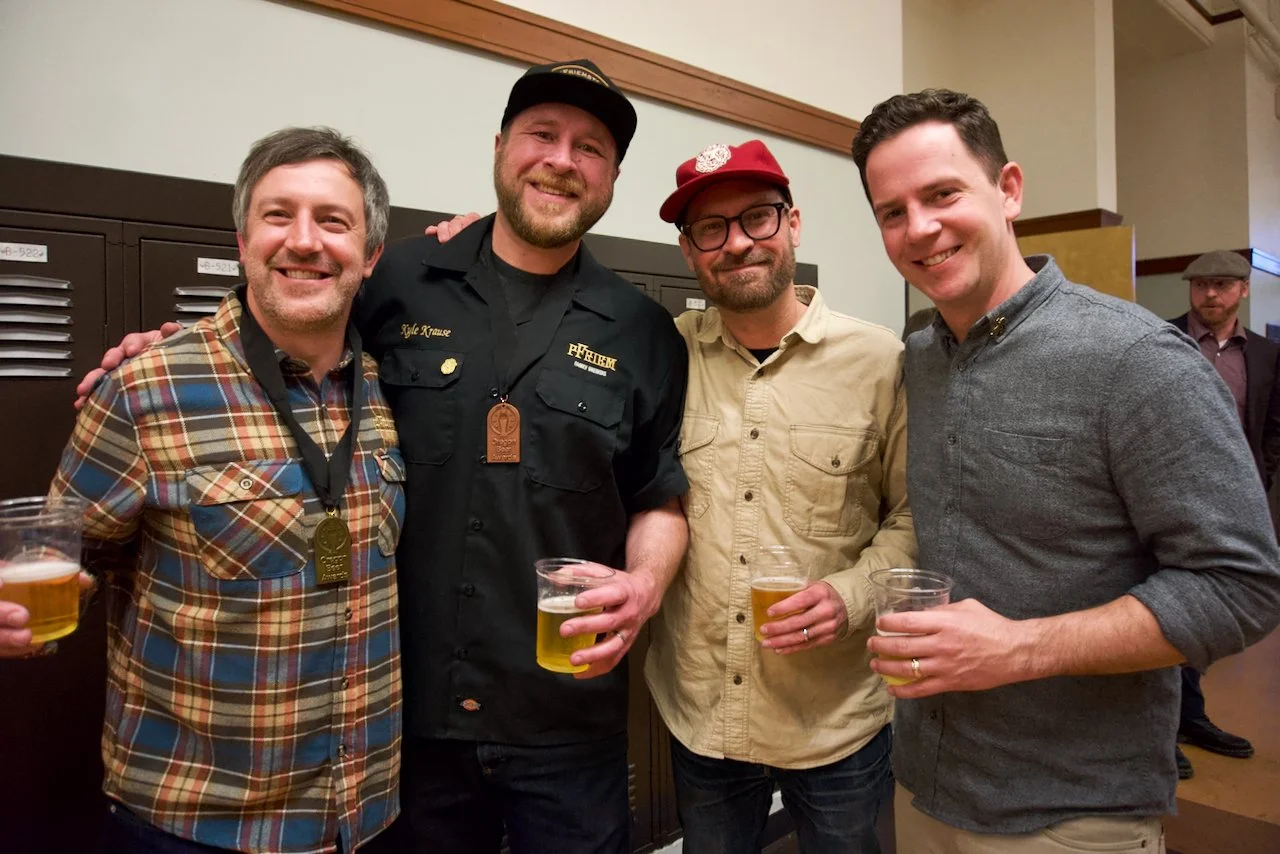
Q: Is Kyle Krause [pFriem barrel-manager and pilot brewer] spending less time on managing barrel-aged beers now? I know he is helping build the draft cocktail program as well, but has his focus shifted at all?
JP: It's evolved. I think being able to have a little more time and refinement has created more opportunity for creativity. And some of this stuff is pretty eccentric in the pFriemsters Union beers, and so we learn from that and take some inspiration and then have a little more time in evolution of those beers before graduating them up from that program. Meanwhile we’re doing the draft cocktail program, which Powell and Marlo work and produce day to day, that's that's a lot of excitement and creative energy and time and attention. So Cascade Locks is still as busy a place as ever, but some of the focus has shifted and changed. And, you know, we're working on bringing draft cocktails to Hood River soon as well.
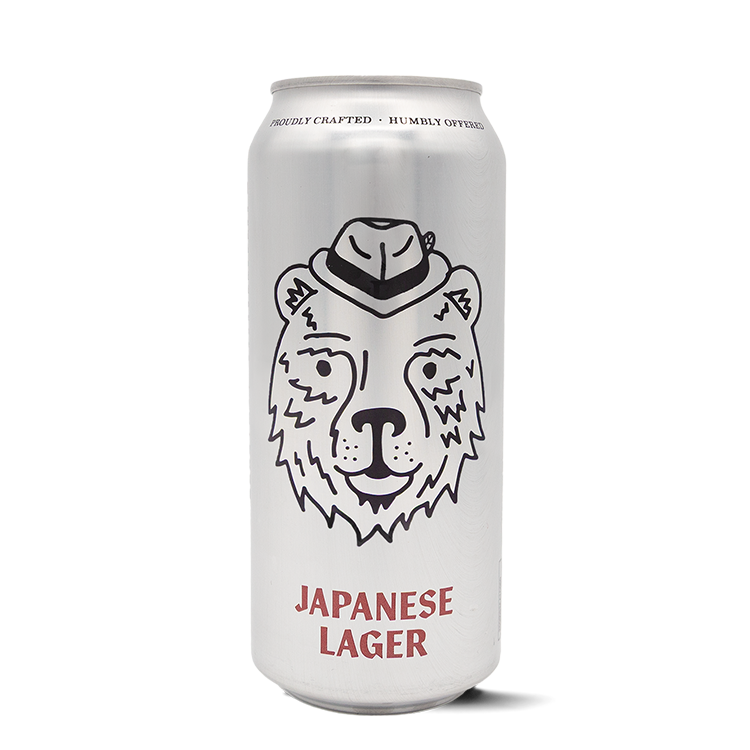
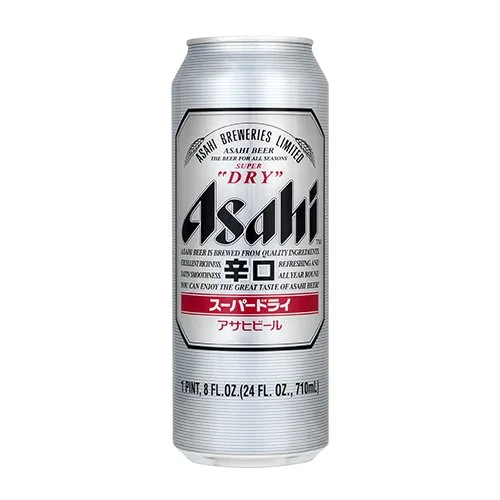
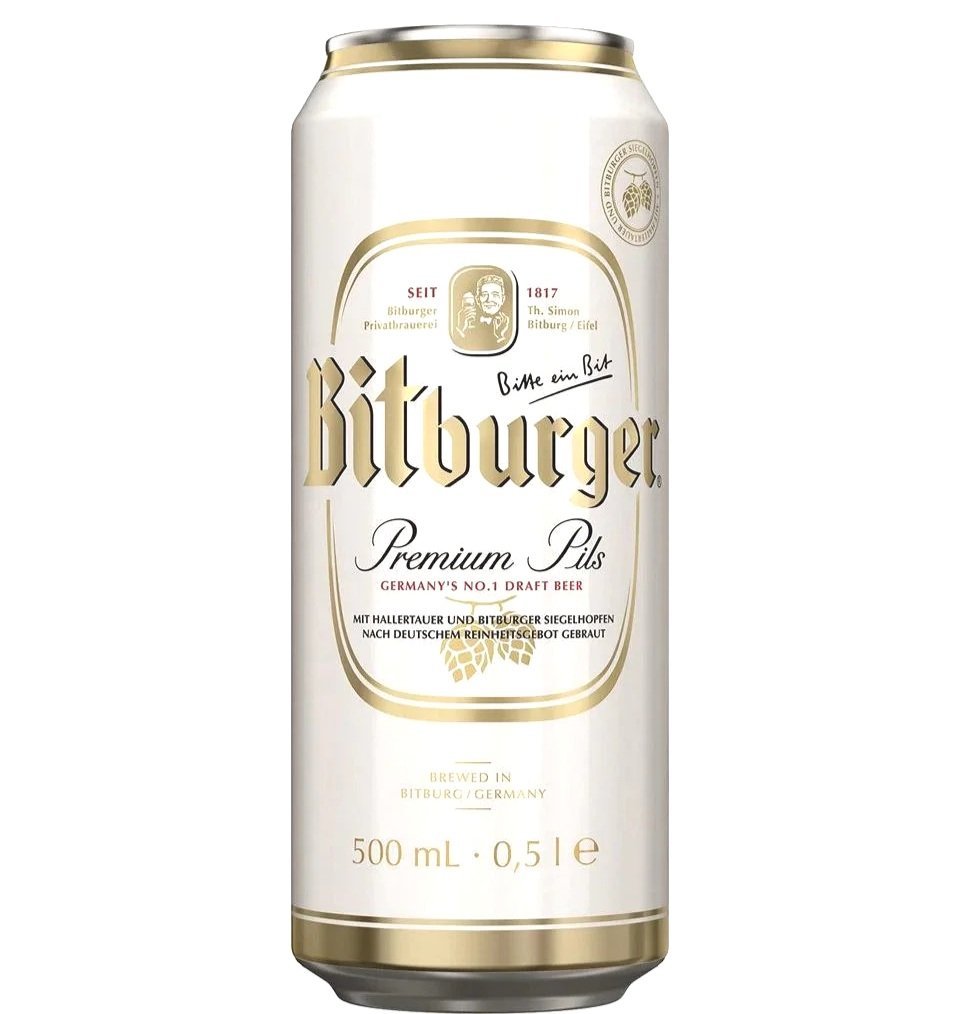
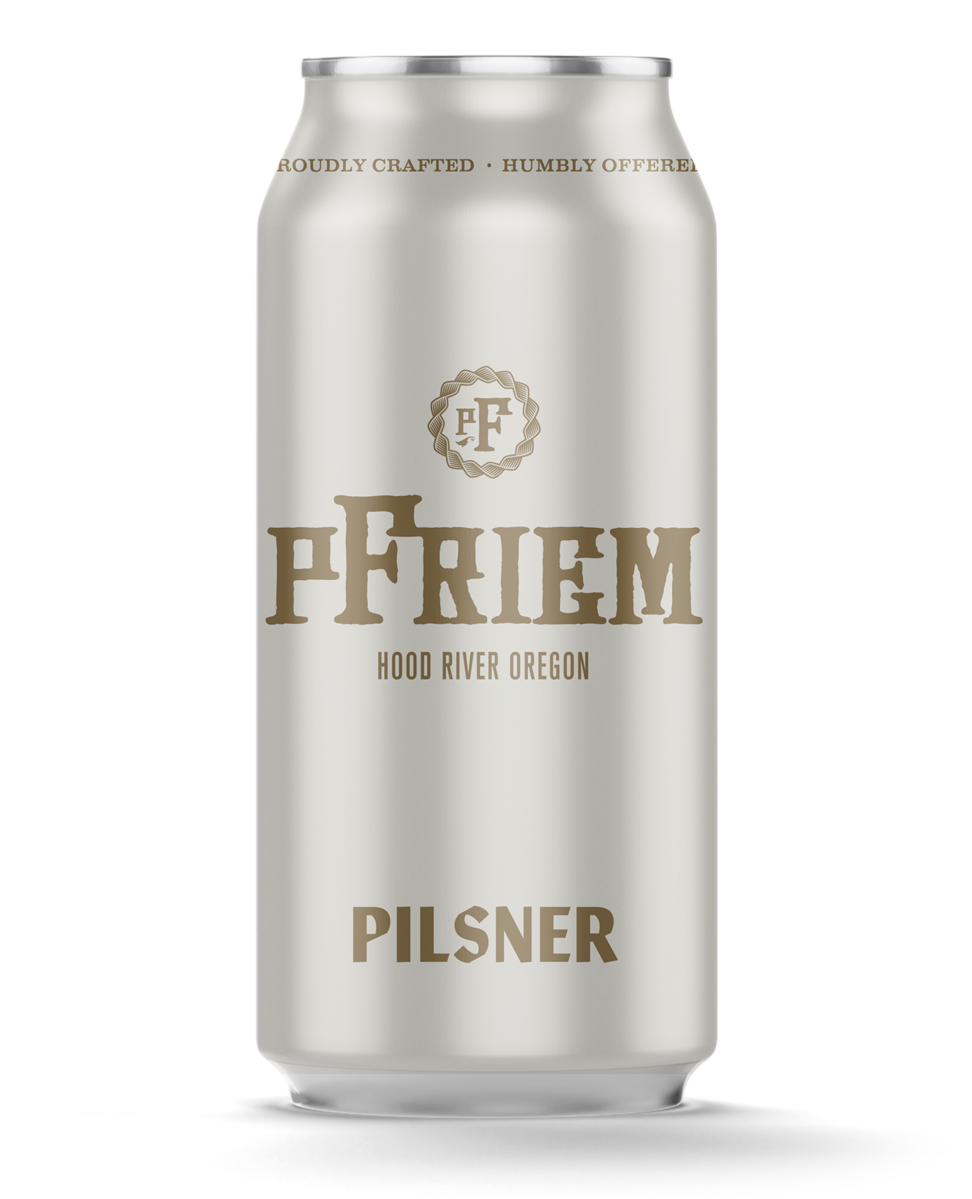
Q: Moving on briefly to the Japanese lager. I was kind of surprised to see when you guys canned that those steels can look much different. Is that kind of a nod to Sapporo or Asahi?
JP: Oh, for sure, we took a lot out of our color palettes. We try to find the inspiration where we can, even how the Pilsner can is white was, there’s a lot of great traditional Pilsner breweries that use white in their branding, Bitburger being one of them. It's been a little bit of a nod towards tradition and respect to that realm. And then Japanese lager, similar to our Pilsner, is a nod to tradition and the heritage of those beers, but also uniquely American and craft beer. That's been such a fun, evolving beer that's got to start very organically. I think we were probabl one of first in the US to brew like a craft Japanese lager, at least one that was made towards a traditional realm. It's been such a nice, steady, slow burn popularity. We kind of graduated it up from the the branding that we use for all of our seasonal and rotating and 16 ounce cans in general, and thought this is just a cool opportunity to break our mold a little bit and do a core beer in a 16 ounce can. We have a program that we run by but we can make our own rules. And a lot of those Japanese beers are served in more large format 500 ml cans and we have lots of 12 ounce cans. So it was also fun to play into that and the color pallet connection We're pretty we're stoked how it turned out. We've gotten so much great feedback, especially for folks that have been to Japan or love Japanese culture. I feel like the beer is even more exciting to them, that it connects to that world.
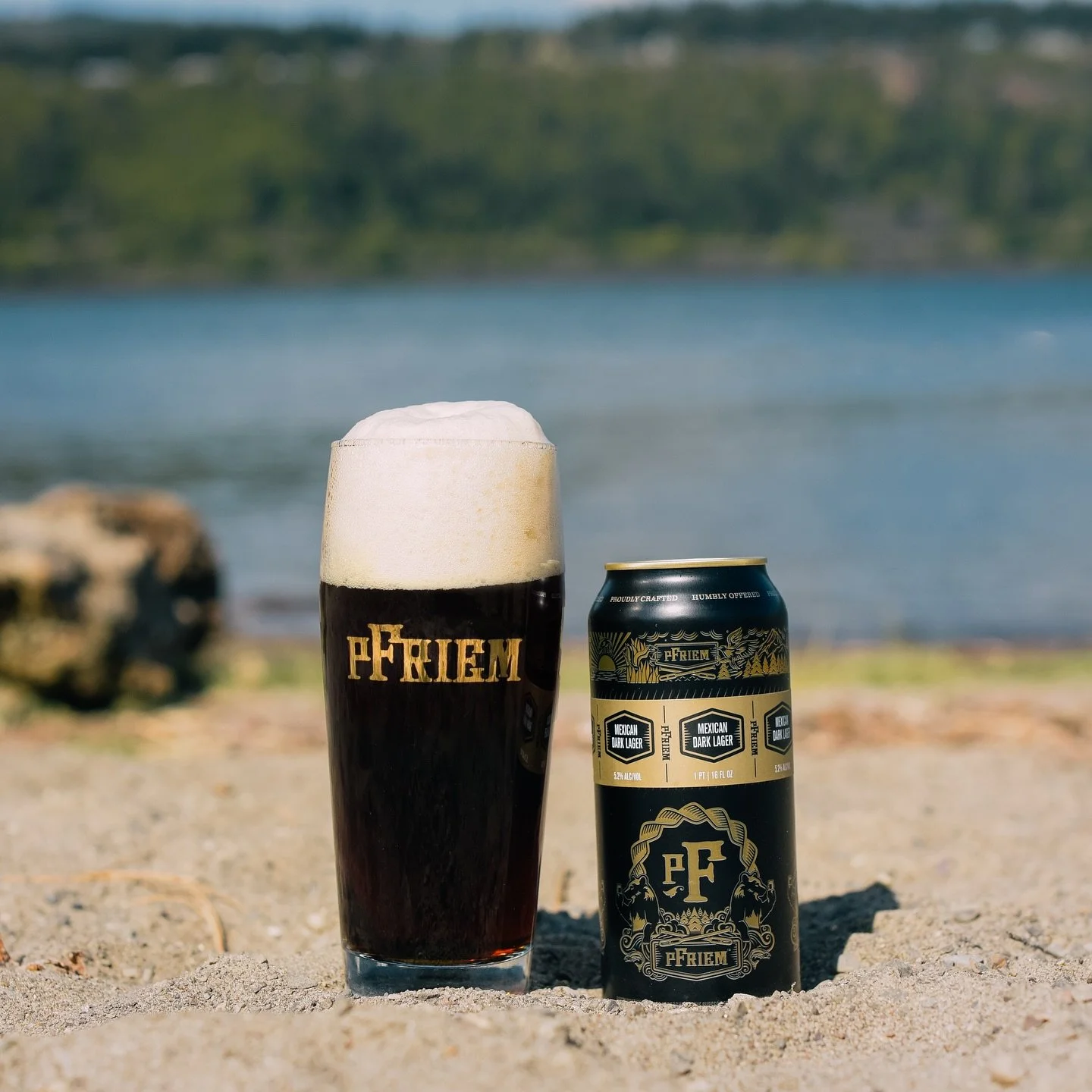
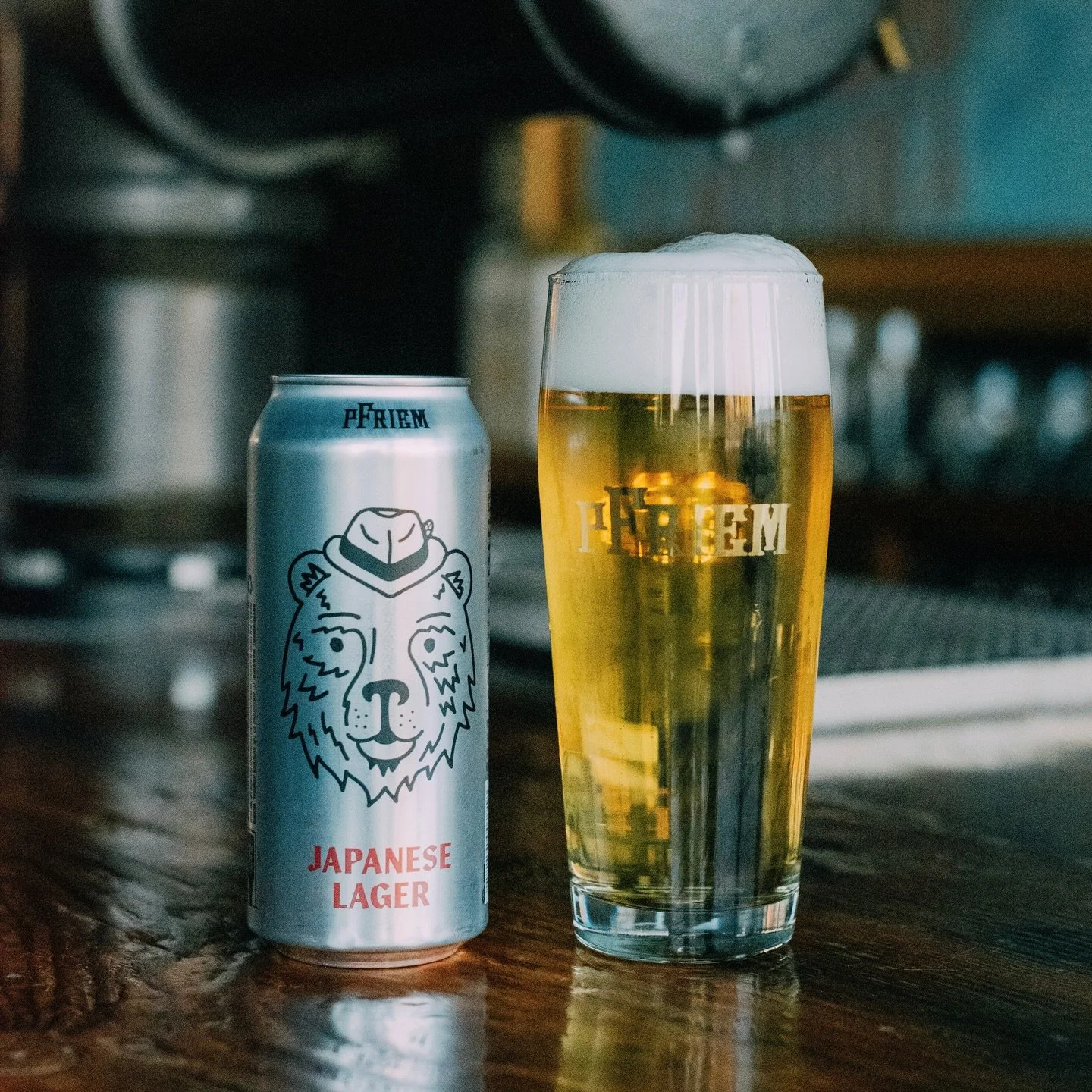
Q: Why do you think that Japanese style lagers are having this kind of big moment right now?
JP: I think it's awesome! I think it's built on the backs of the Mexican lager movement. I think if you look back historically, especially in the industrial space of beer that has had such a dominating effect on the majority of drinking. Its also been exciting to see the Modelos, the Pacifico, Victoria, whatever, Mexican imports have gained popularity in the US and obviously we have a large Hispanic drinking culture and I think that's part of it. I really enjoy a fresh Modelo on draft when I'm in Mexico. I mean, that is a delicious beer, and I think it can be more interesting than than some of the domestic lagers and I its similar in Japan. I know that they're industrial breweries, like Asahi and Sapporo, but they’re a little bit closer to the larger breweries and Germany where when they are fresh they are good. Especially with Japanese lager, I would take those any day. If I had a side by side fresh domestic lager in front of me, I would take a fresh Japanese lager any moment. And I I think it speaks to like the consumer and what people like to drink. I think there's also a big excitement about Japanese culture, a lot of respect in the United States. And there is obviously Japanese heritage and community here. More and more people go over there and I don't know if I've ever met anybody that has been to Japan doesn't come back and was like ‘oh my gosh, I love Japan.’ The people are lovely. Food is amazing. Just such a beautiful country, and they also make great beers, its a great beer drinking country. So I think I'm excited that Japanese lager as a whole is having more presence in the United States. I think from the craft perspective having some of the industrial brands being brewing here domestically is positive for your culture and drinking occasions, and ultimately the consumer has good choices.

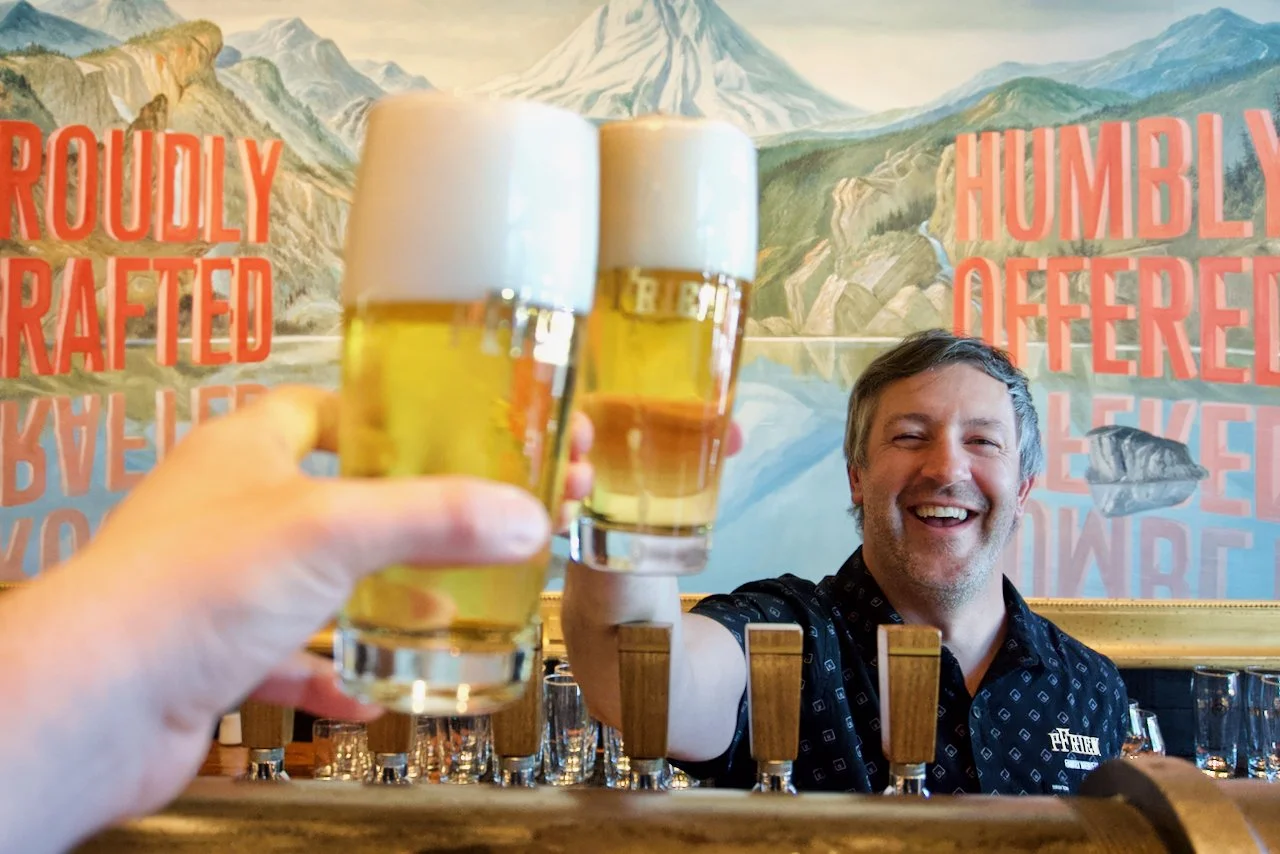
Josh Pfriem at the pFriem Family Brewers 2024 anniversary party (photo copyright New School Beer)
pFriem Family Brewers (pronounced “freem”) is a Northwest and European-inspired brewery based in Hood River and Milwaukie, Oregon founded in 2012. Their latest beer release news from pFriem can be found here.