


Oregon breweries, cideries, and even small distributors are rallying in the wake of Columbia Distribution’s acquisition and mass layoffs at Point Blank Distributing. The latest, following the launch of Go Self Distro, and Day One Distro’s place filling the void for beer nerds across the state, the latest news is of a brewery and a cidery teaming-up to form a new cooperative distribution model.
Drop Bear Brewery of Eugene and Blossom Barn Cidery of the Applegate Valley have launched the Oregon Makers Cooperative (OMC), a self-distribution partnership that allows each company to sell the other’s cans and kegs directly to retailers. The benefit is to expand each OMC members reach while keeping sales, margins, and storytelling in the hands of the people who make the beverages. They also hope to expand the OMC to cover other types of small alcoholic beverage makers.
“The goal with the cooperative is to build the members of the collective for a larger geographic coverage area but still only have one maker of each category-- beer, cider, wine and mead,” says Blossom Barn Cidery co-owner Jeremy Hall. “Each member should be unique in their category (like how we make perry and Drop Bear does Austrialian and other international styles of beer), already be self-distributing, and have the founder/maker involved in sales. Then we are capitalizing on passionate, knowledgeable people making the sales calls, and leveraging time that is already being spent developing relationships and making deliveries.”
“No one can tell the story of craft beverages better than the producers themselves,” said Drop Bear Brewery founding brewer David Lehane. “We’re already talking with buyers about our Australian and international-style beers, and now we can also showcase Oregon’s only cidery specializing in perry—hard cider made from pears. That’s a compelling lineup.”
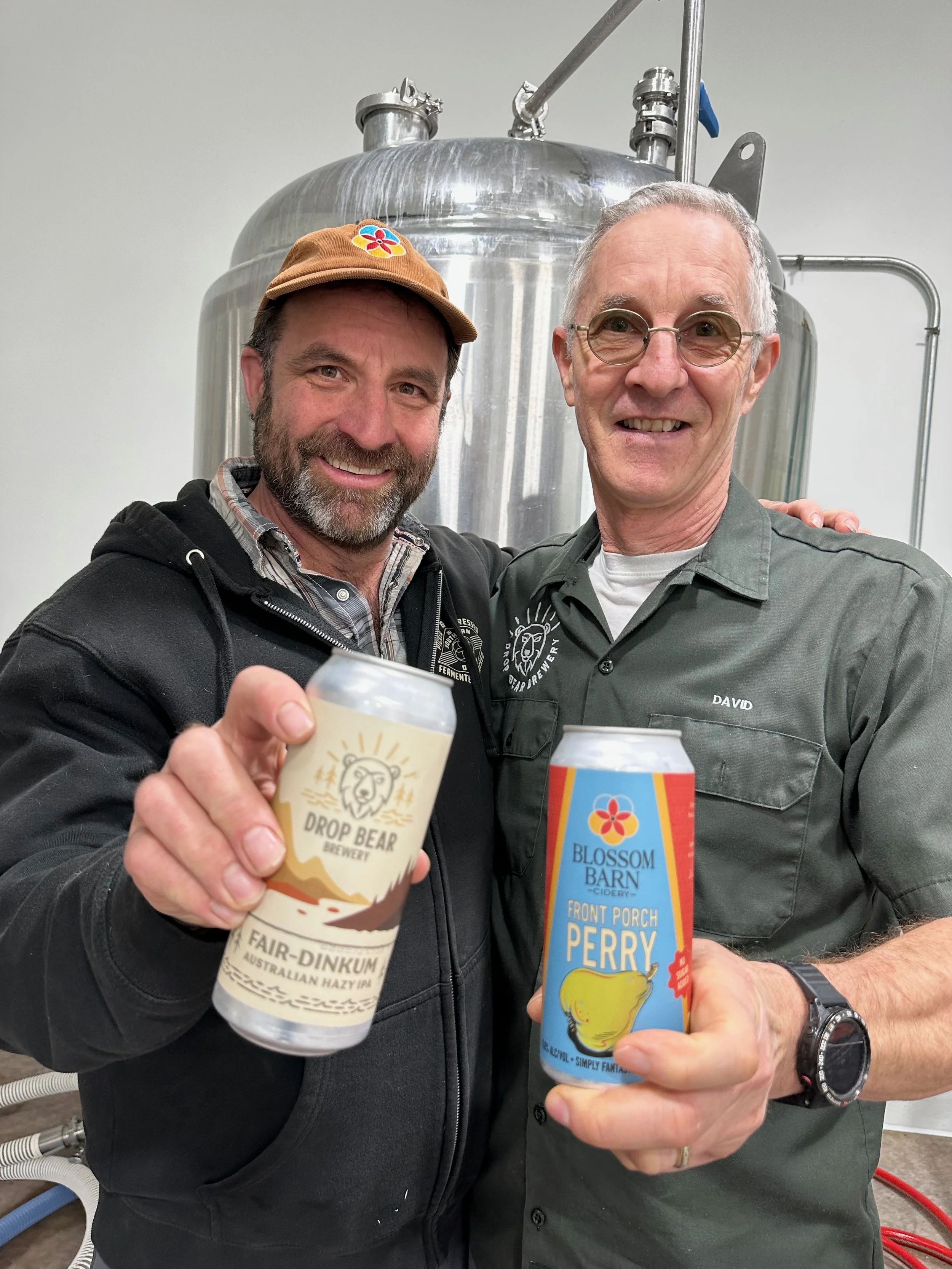
For many small producers, traditional distribution falls short. “It’s incredibly challenging to find a distributor who will consistently support small brands,” said Blossom Barn Cidery co-founder Jeremy Hall. “We don’t have the budget to hire sales staff outside our local area.”
Blossom Barn operates a tasting room in the heart of Applegate Valley wine country, while Drop Bear runs a taproom in south Eugene. While on-site sales remain important, wholesale distribution is critical for moving volume in cans and kegs. Through the cooperative, each producer can focus on production while leveraging the other’s existing sales relationships. Blossom Barn and Drop Bear will each maintain a small stock of each others products and are switching off pick-up and drop-offs to each other to minimize commutes each time. They also carry each others products at their respective taprooms.
“We can serve accounts in Grants Pass, Medford, and Ashland,” said Blossom Barn co-founder Erin Chaparro, “but we can’t grow pears, make and package cider, and build relationships hours away. David and Lorraine are already calling on accounts in the Willamette Valley and can present our small-batch perries alongside their beers.”
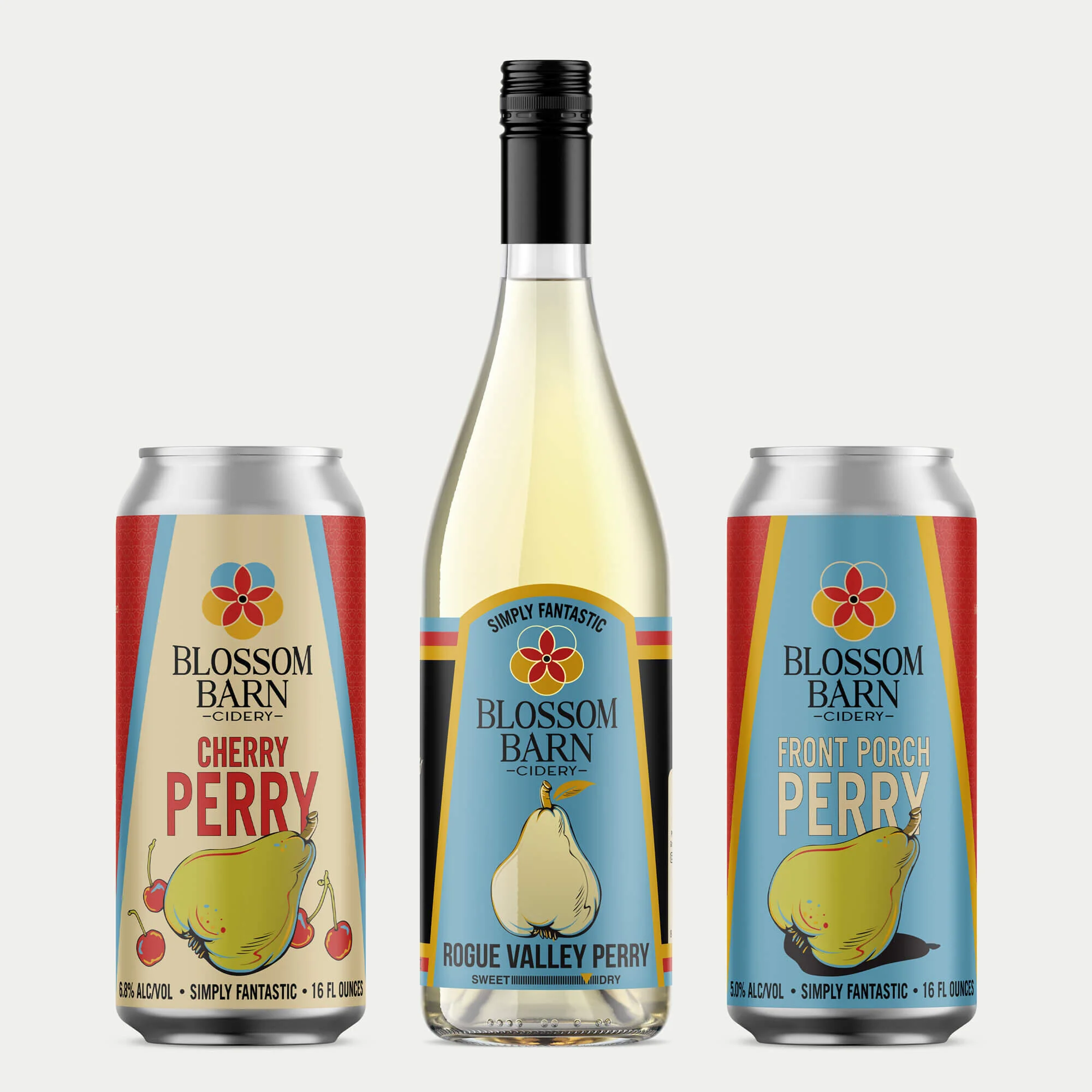
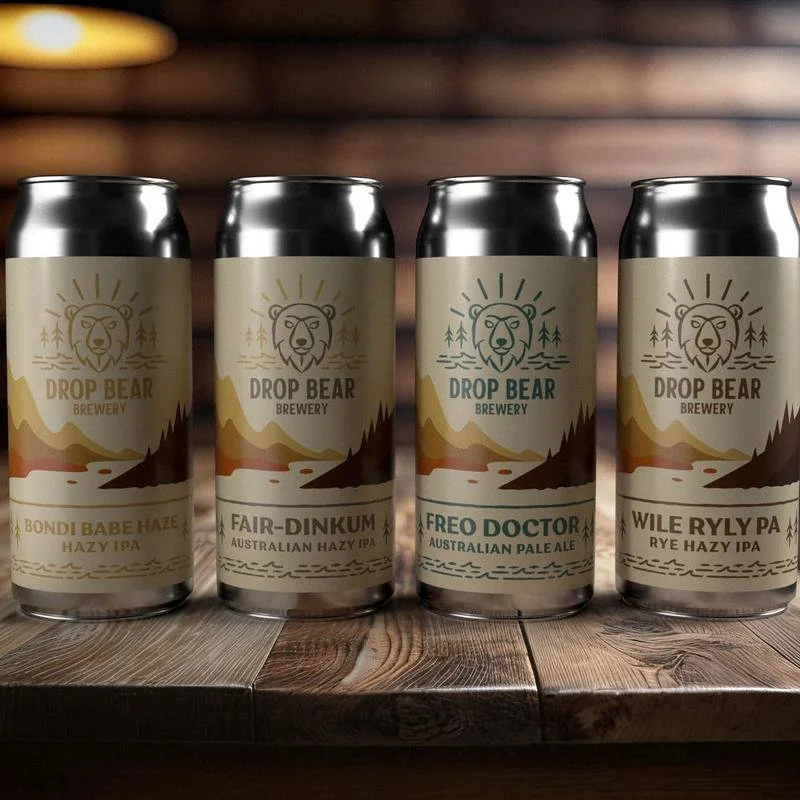
The cooperative model allows the producers to retain roughly one-third more margin than conventional distribution. “Selling a bit more beer at a higher margin can be the difference between breaking even and profitability,” said Drop Bear co-founder Lorraine Lehane.
The OMC keeps sales in the hands of independent producers invested in quality and authenticity. The founders hope to expand the cooperative to include other non-competing beverage producers without competing within beverage categories, but have yet to find the right fit for the next brands to join the cooperative.