

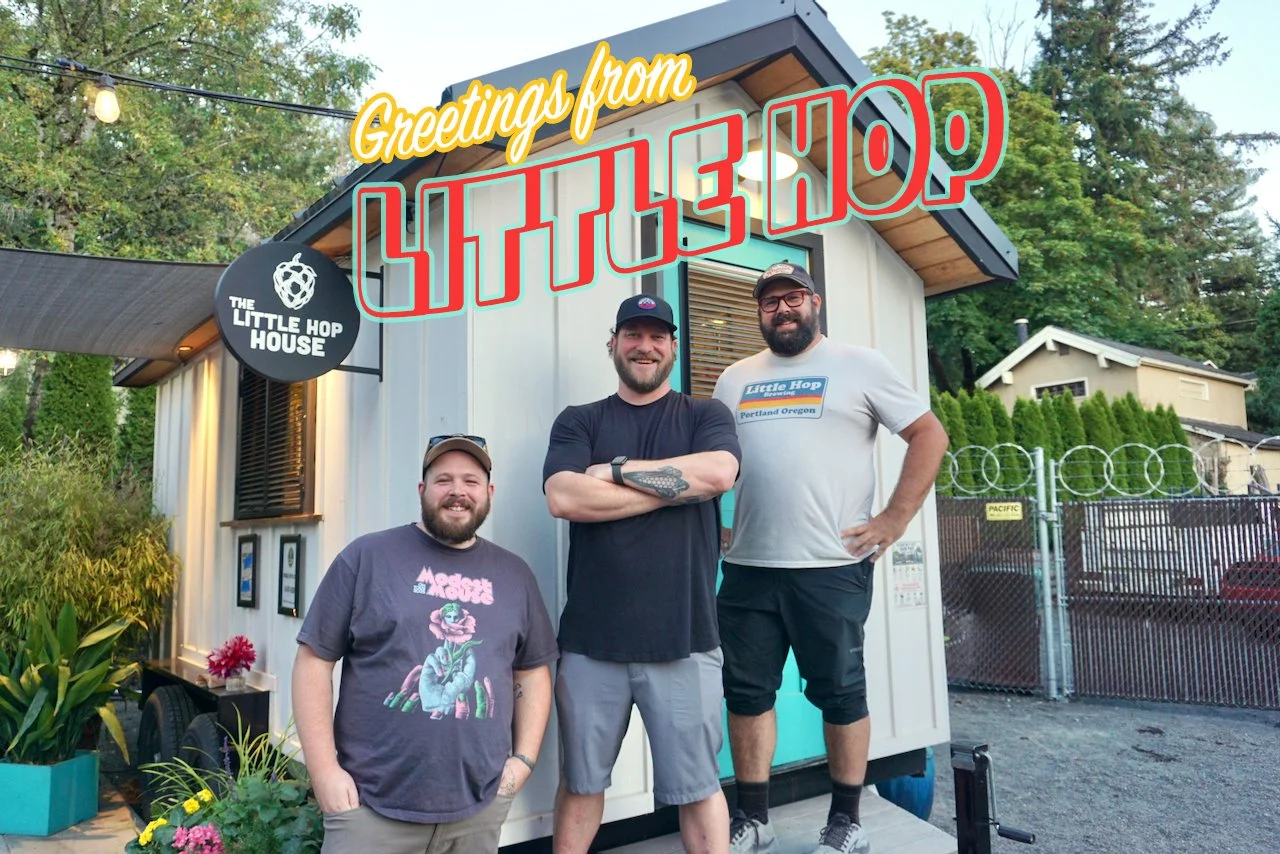
The Little Hop Brewing is the smallest-local success story in Portland beer. In a time where nano breweries are now an endangered species, the tiny Little Hop Brewing in southwest Portland’s Multnomah Village neighborhood is an unlikely success story that is enjoying a dedicated cult following after 5 years grinding out of a tiny home on wheels.
Zak Cate and his wife Lisa founded Little Hop Brewing from their detached garage in 2020. Previously, Zak was a Homebrewer that completed Portland State University’s Business of Craft Brewing program and then got a job brewing at McMenamins Kalama Lodge location.
“After two years things were going well with McMenamins. They let me do pretty much whatever I wanted then 2020 hit and everyone was laid off so we decided to open Little Hop Brewing,” says Zak. “I eventually was hired back by McMenamins while we were building out Little Hop and then when we got the final paperwork from the OLCC I quit which was the summer of 2021.”
Opening his own brewery was always part of the plan, but after 3 years at McMenamins things were getting pretty comfortable. After getting thrown for a loop with COVID, the family decided to take a risk and start small - really small.
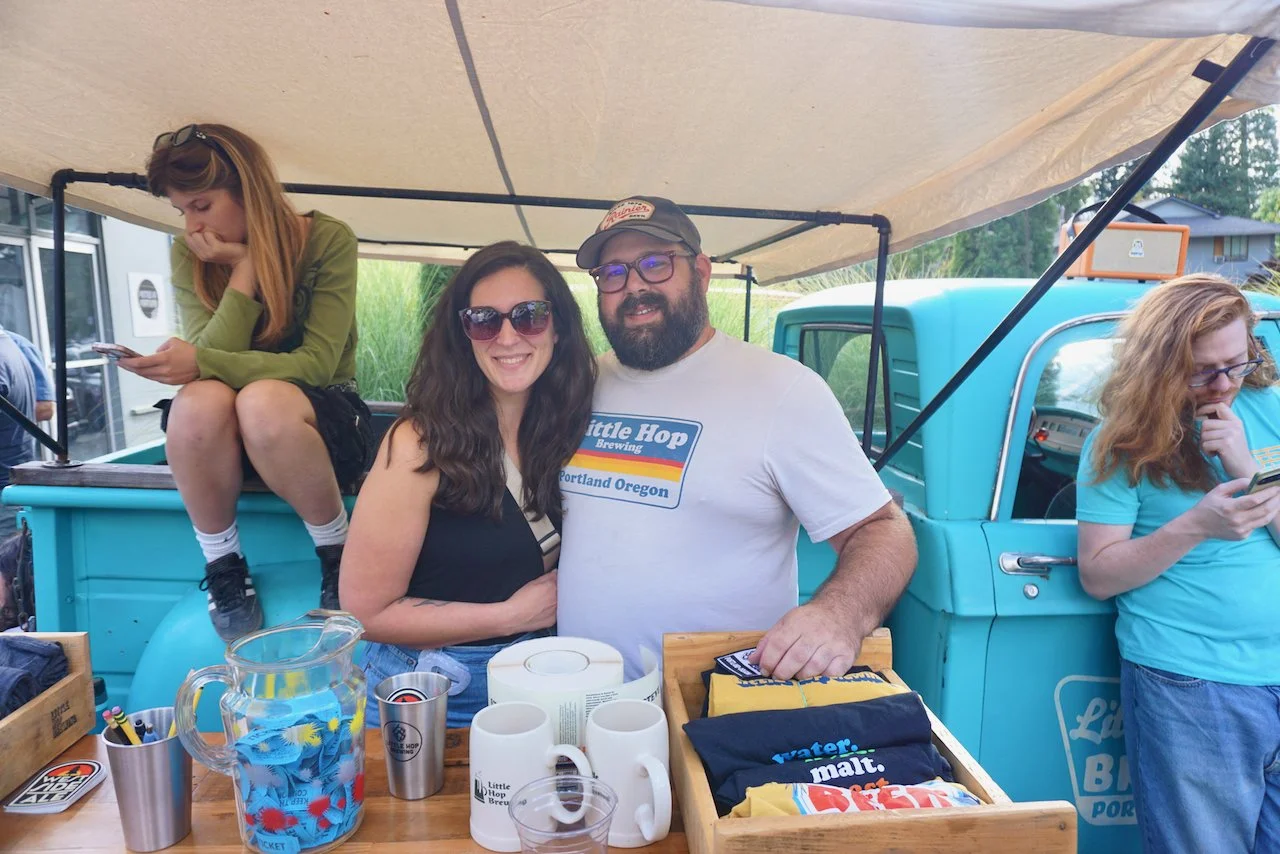
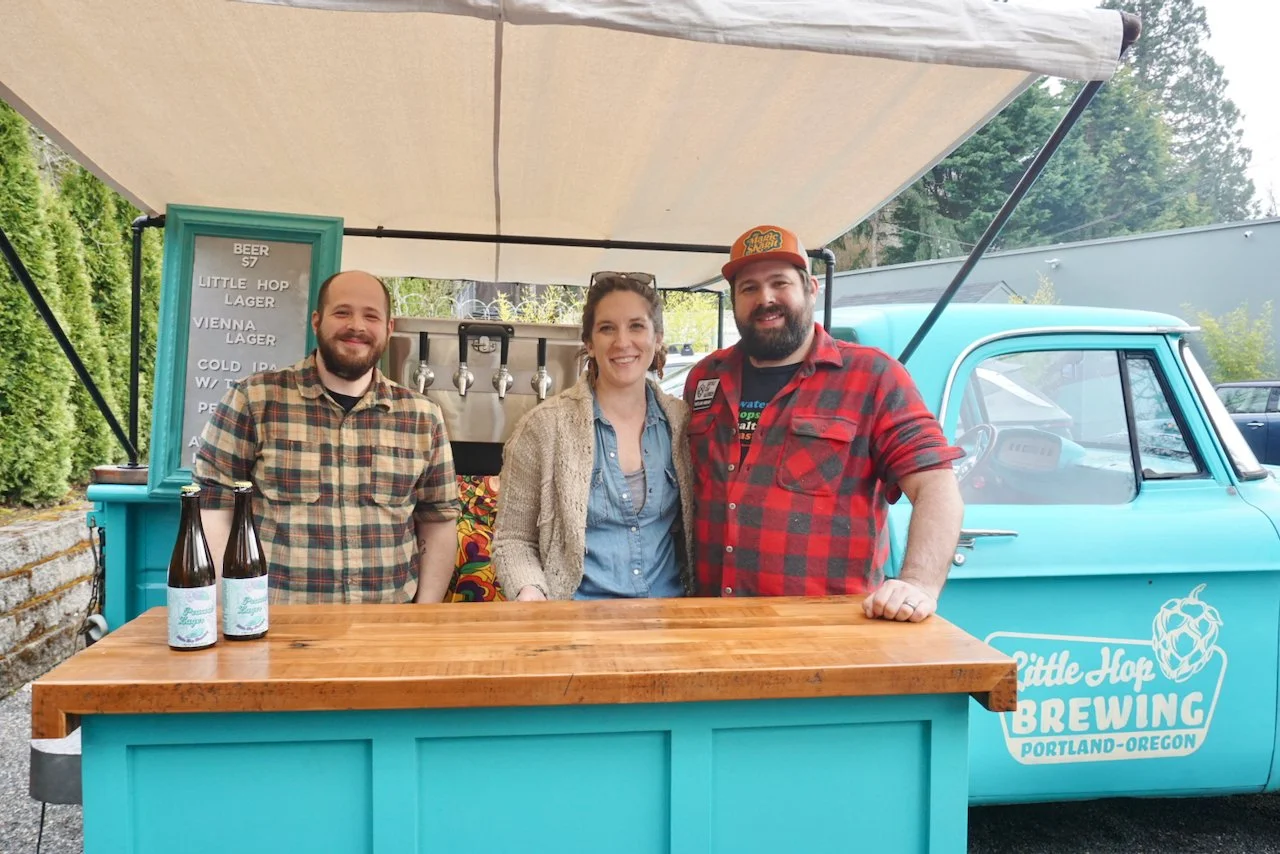
Tiny Hop Brewing founders Lisa and Zak Cate
Zak began brewing from a 1 barrel system, while his wife Lisa held down a day job as a nurse at Doernbecher’s Childrens Hospital and became Little Hop’s sales person. At first Little Hop Brewing made mostly quaffable malt-driven ales and lagers sold draft-only by the cup at farmers markets, neighborhood taprooms, and small events like the defunct Nano Fest. Their beer immediately caught my eye first because of their sharp social media presence and branding, and then for the quality of their beer, both things that were more often then not lacking in other nano brewing operations.
Zak and Lisa would roll up to events with a vintage 1963 Dodge D100 retrofitted to be a tap truck, then put up a pop-up tent and a table and sell beer off the side. But that was unwieldy, unsustainable, and inefficient, they knew they needed something just a little bit more stable and permanent. Especially if they were going to get the low margins and long hours to move a tiny bit of beer and make enough money for the effort to be worth it.
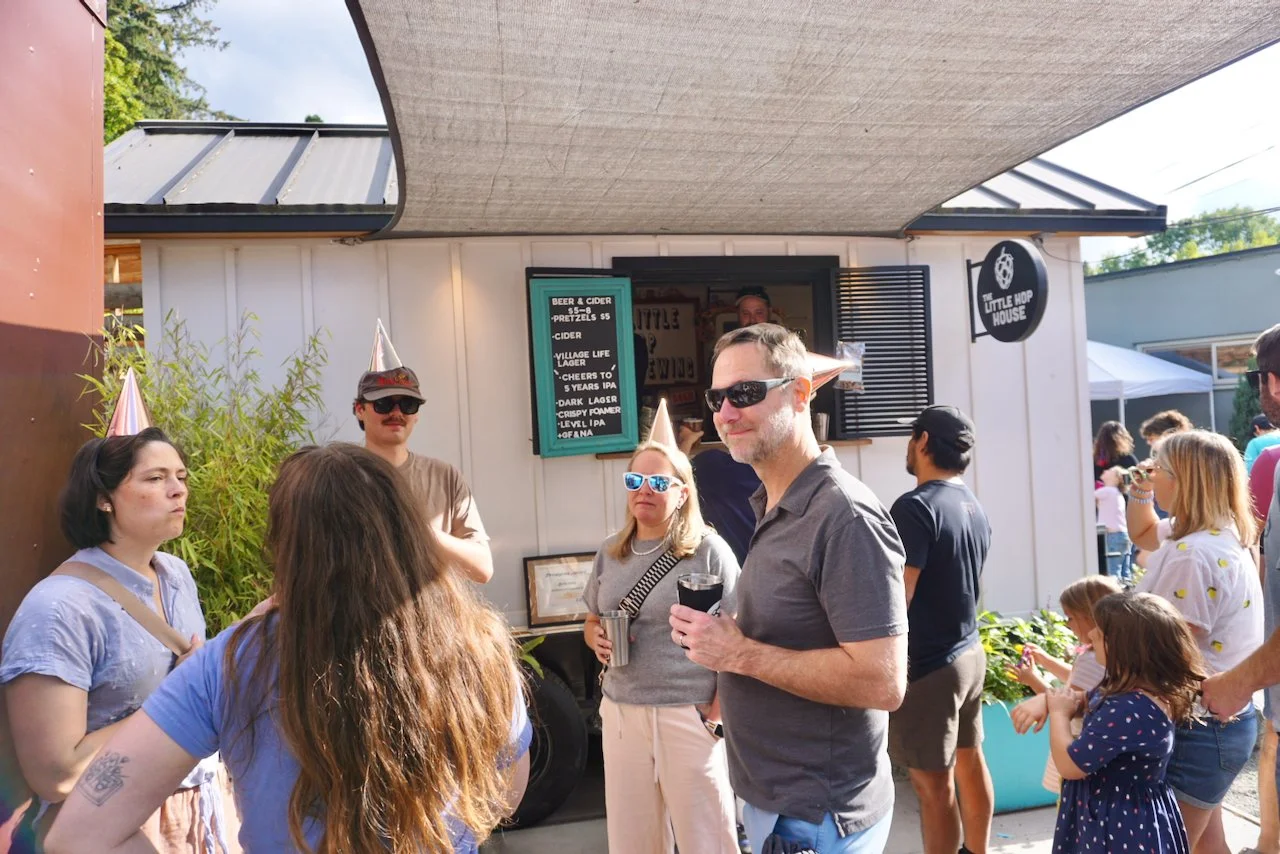
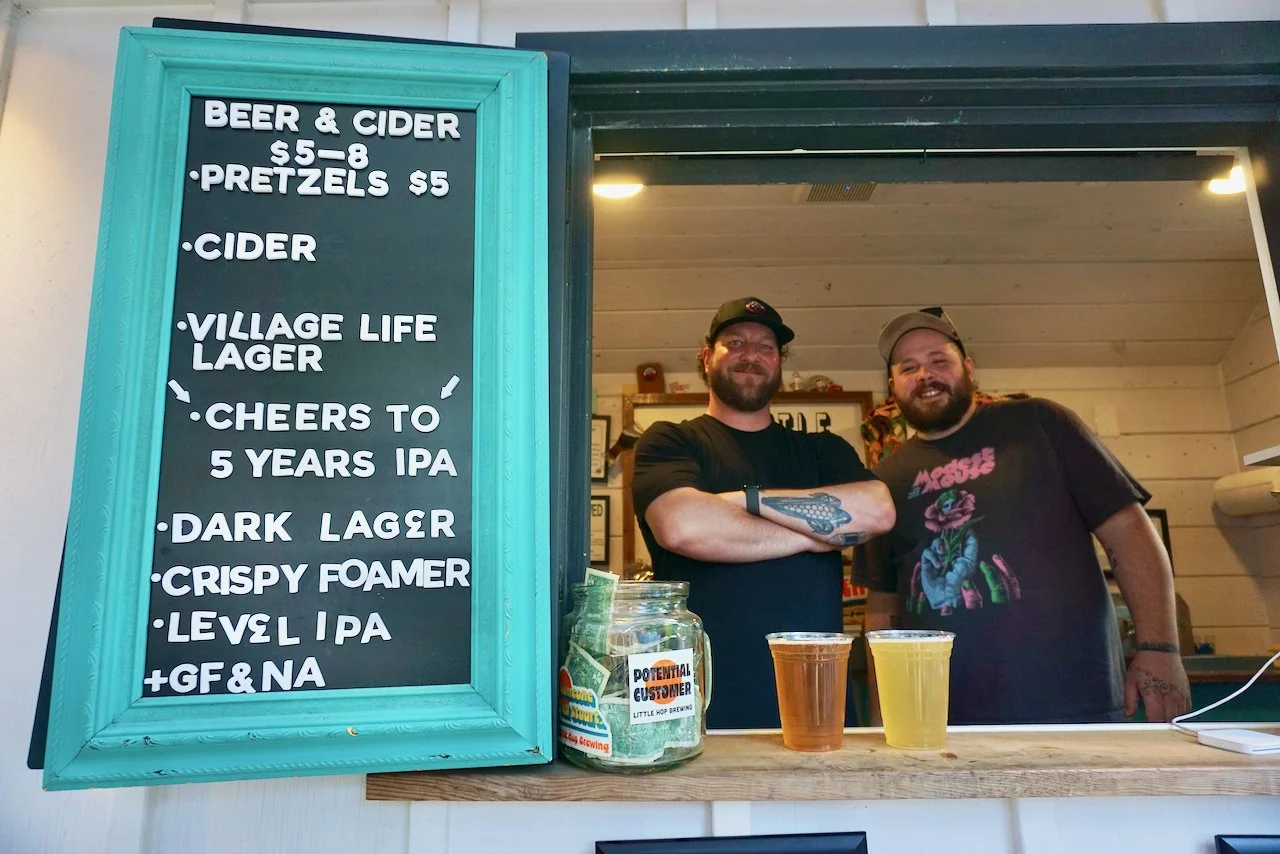
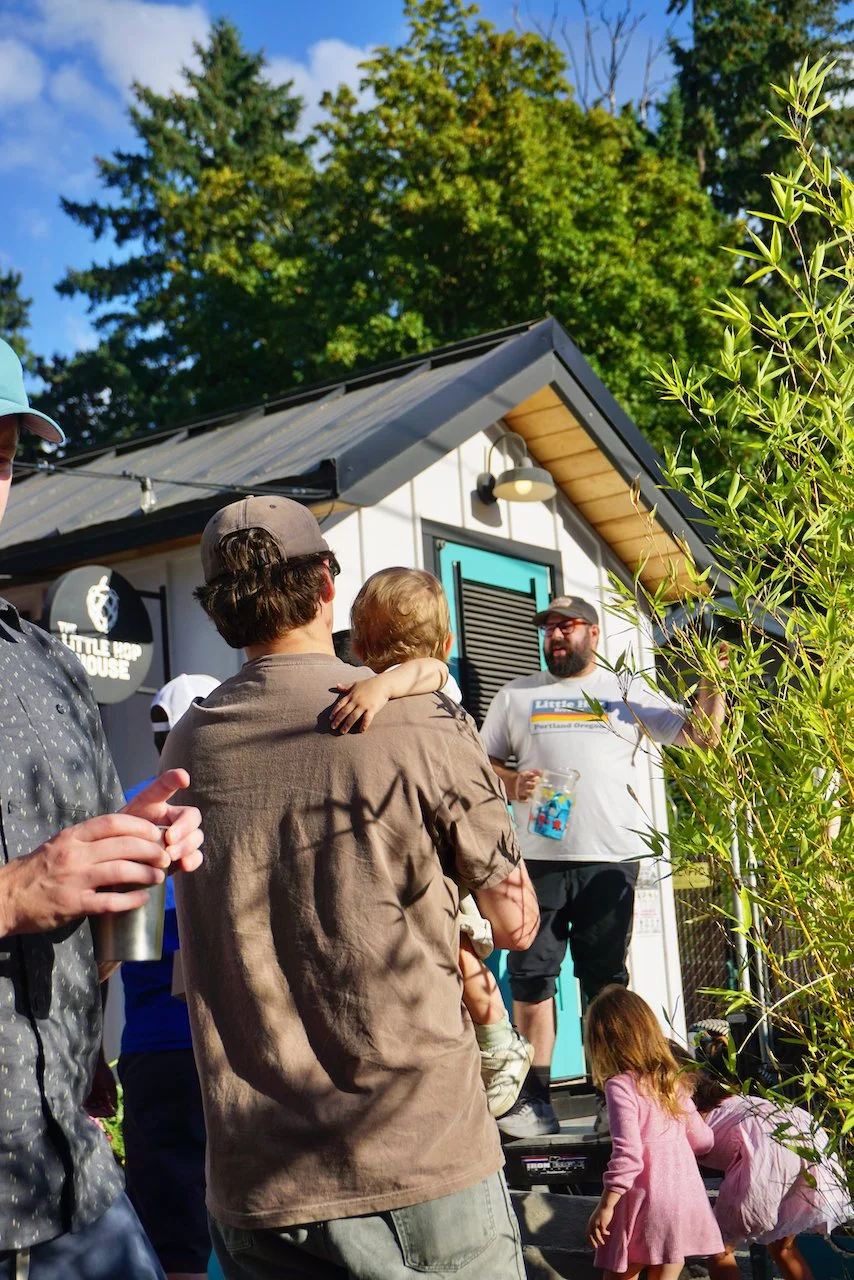
Little Hop obtained a custom made metal trailer base and a mini home from Iron Eagle in Troutdale. Utilizing his previous career in welding, mechanics, and carpentry, Zak built out The Little Hop House to have a tiny walk-in cooler and tile and wood leftover from a family home remodel. The counter is made from Zak’s childhood kitchen table, and he hand lathed the tap handles and welded on a shutter that serves as the ordering window.
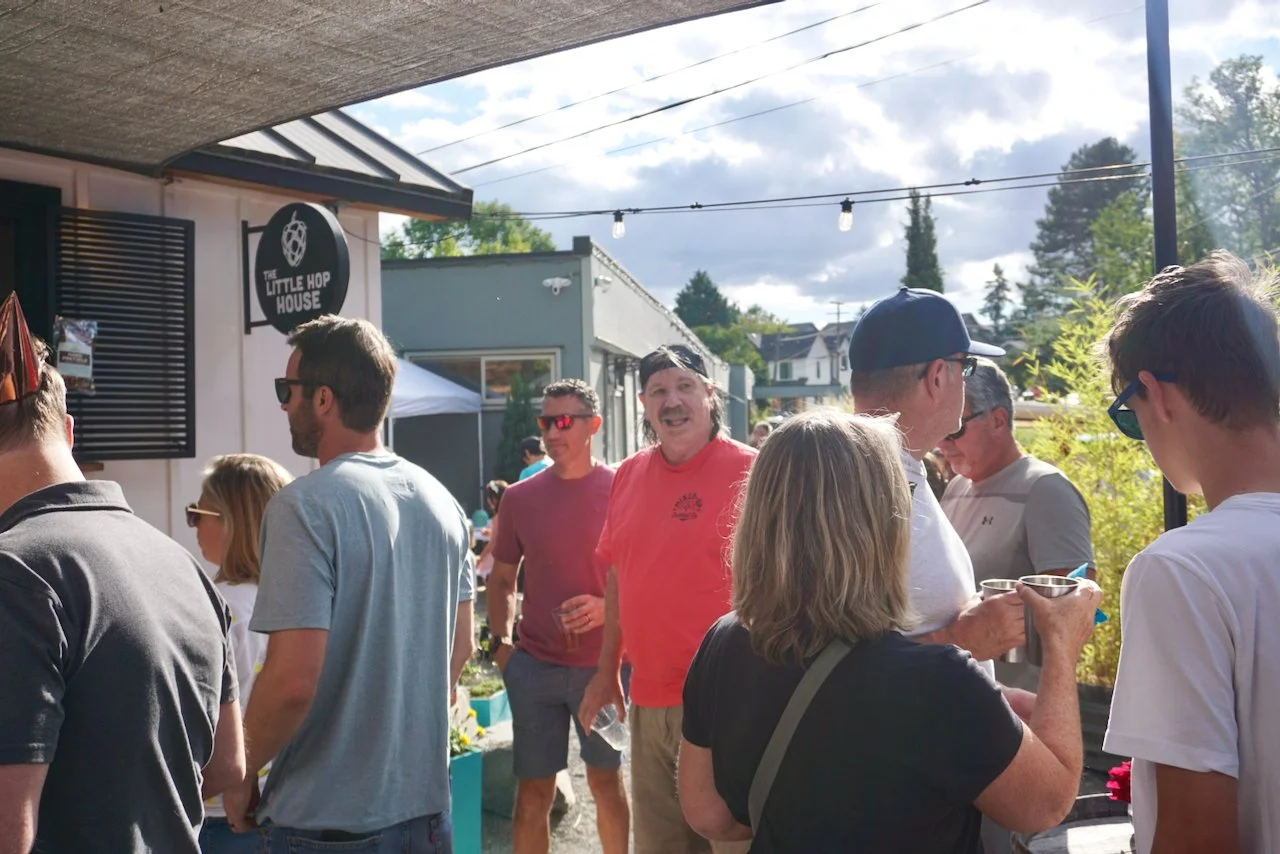
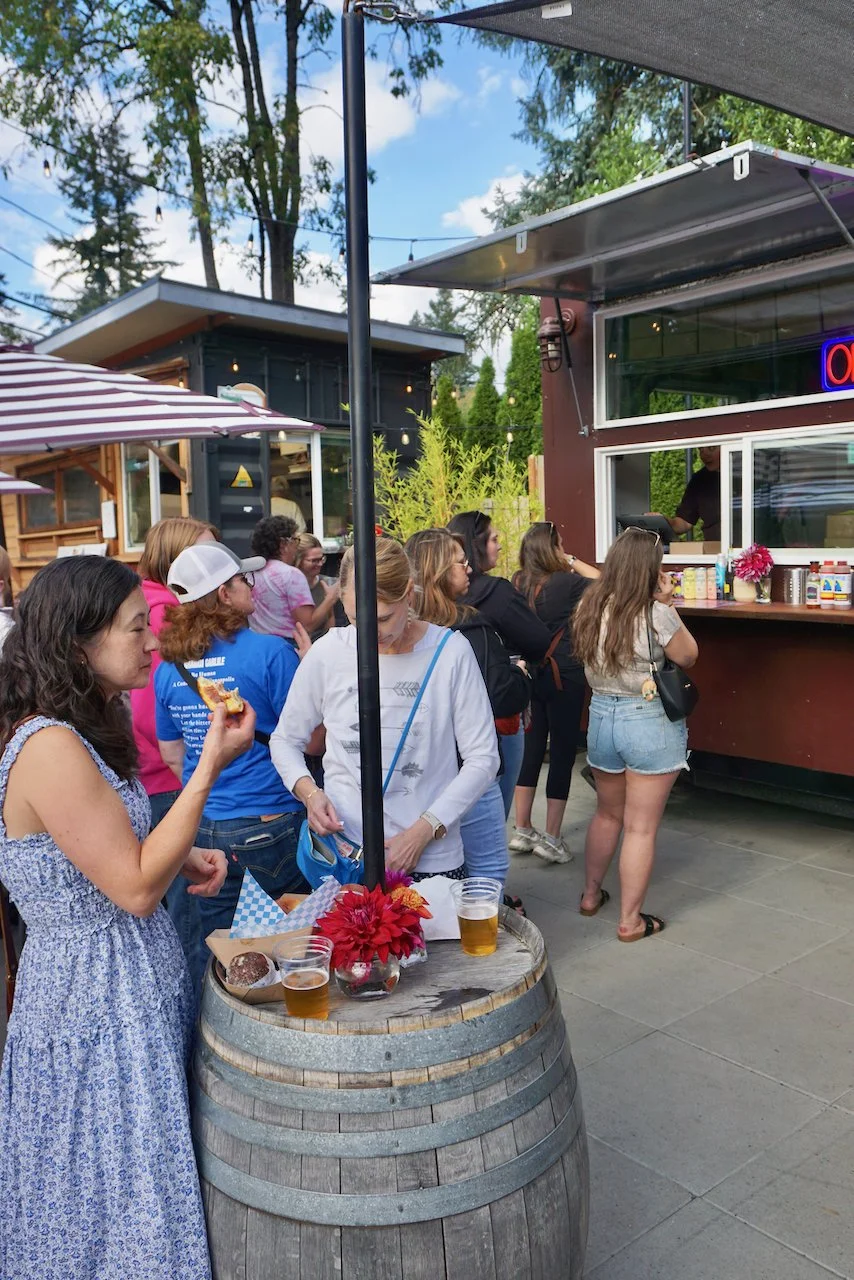
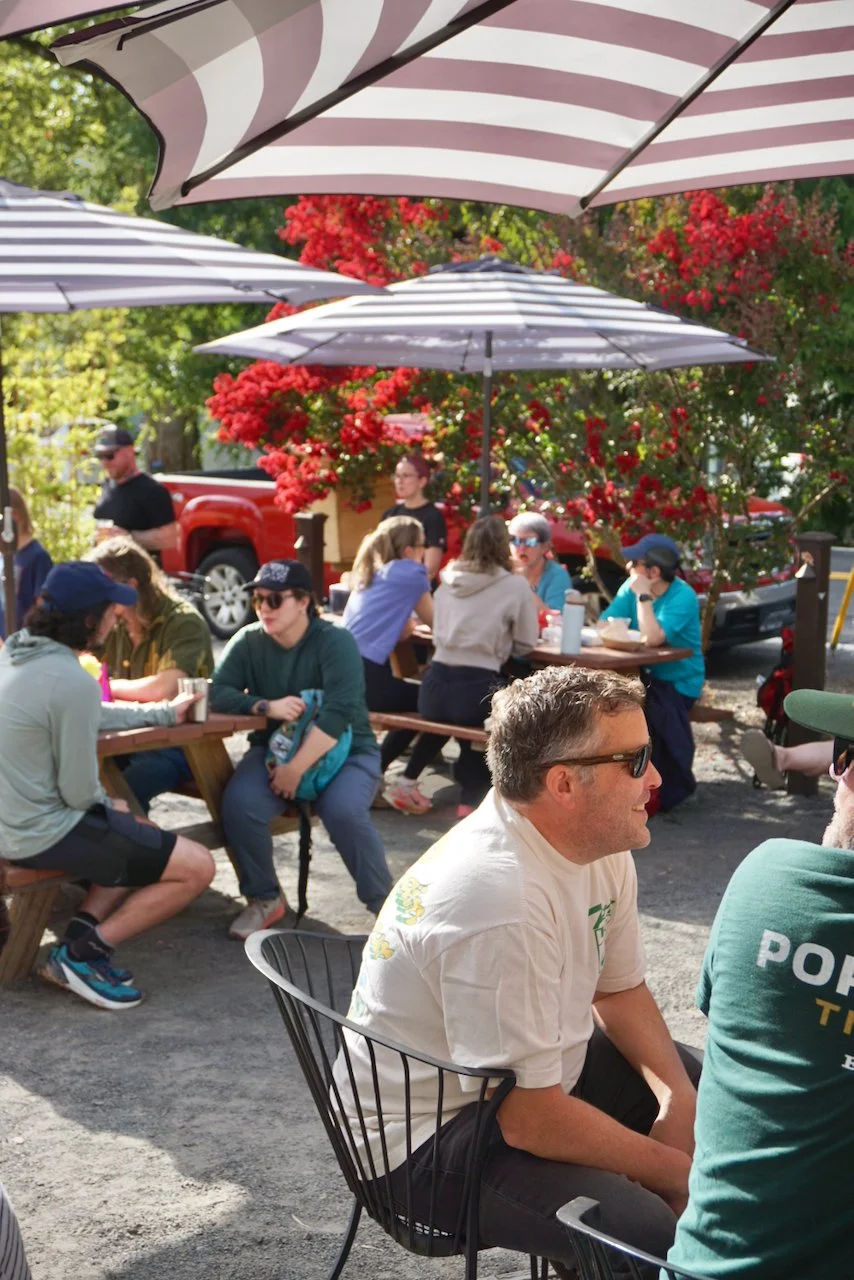
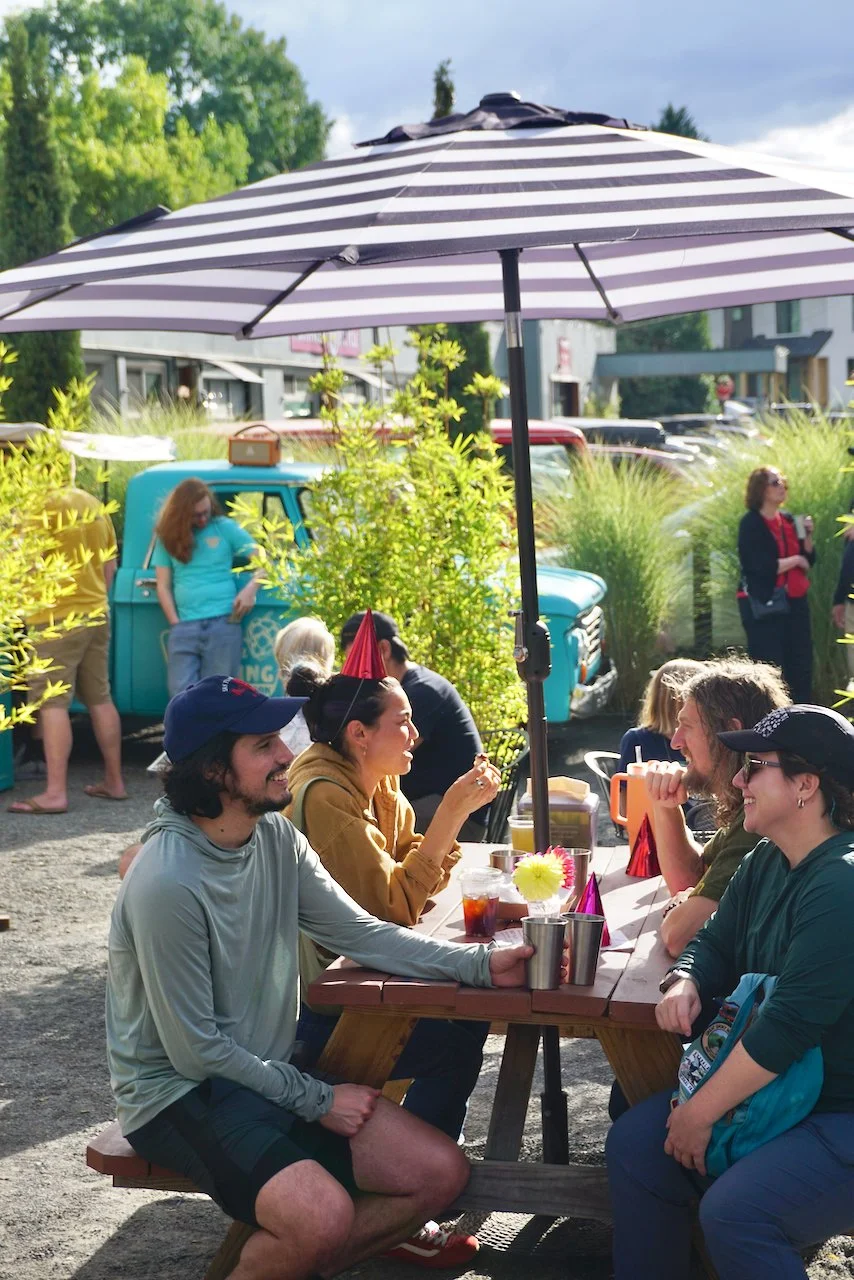
The Little Hop House trailer has been parked in a nook on SW Garden Home Road next to a small rural shopping plaza in a residential stretch of Multnomah Village since 2023. The unsuspecting location is more charming and appealing then it sounds, situated on a small landscaped beer garden with a fire pit butted up against trees and quiet homes that make it feel detached from the hustle and bustle of the city. It has been a hit, now joined by neighbors Pizza The Gathering and Bun Bandits, Little Hop Brewing anchors a popular destination for locals that garners enough business to sell out of beer even operating only about 20 hours per week.
At one point Zak considered opening an indoor taproom and brewery at the adjacent shopping plaza with an open suite, but decided to keep going with the current business model instead. On the surface nothing has changed, but behind-the-scenes the business has evolved.
An Interview with Zak Cate of Little Hop Brewing:
Who all is Little Hop Brewing today, and how have you grown since you started?
Zak: Taylor, Jimmy and myself. It started with Lisa and I, then we brought Taylor in when we started the tap house. Jimmy came along in May this year and bought out Lisa's part of the business. Jimmy and I are equal owners which has allowed me to unload some of the burden of running the business and brewing. Jimmy has been a cook and chef here in Portland since he moved here in 2012. For the past decade Jimmy has been running restaurants and kitchens in Portland for Nike, Grassa/Lardo, making fresh pasta for Montelupo, and more recently has been a private chef and stay at home dad. Jimmy actually has a OBA silver medal that he won making the Grassa Bionda beer for the Grassa restaurants, in colab with good friend, and at the time Allegory Brewer, Charlie Van Meter (now with Xicha).
Back in the golden years of the craft beer boom circa 2011-2017 or so there were a lot of nano breweries and they seemed like they were finding a lot of success, but that seemed like it was starting to run its course even before the pandemic and the industry slowed down. What made you think it could work for you?
ZC (Zak Cate): I think understanding marketing and overall visuals are key, and building everything ourselves to ensure that helped. The best advice I've ever been given was from our financial planner. He essentially said "you need to be a marketing company that happens to sell beer". Understanding that concept has helped us to be successful in one of the most saturated beer markets, maybe in the country. The reality is, making a decent product isn't enough. You have to stand out. We choose to lean into what most people would consider our weakness, which is our size. We essentially rebranded the term "nano" and relabeled it "little" which has a more charming and endearing feel to it.
When you first started Little Hop Brewing where did you see yourself in 5 years and how does it compare to where you actually are now?
ZC:When you look at the business plan it is almost 100% on projection. The only things that differ are bringing Taylor my brother on as a partner when we opened the tap house, and recently Jimmy buying Lisa out of her ownership in the business. But as far as volume and sales goes, we are exactly on the business plan's growth projections. The plan was always to can beer, and sell direct to consumers at farmers markets, so we could test the concept and product with the local community. If sales were good enough, we could then build a little tap house on wheels and join a food cart pod somewhere. This would allow us to keep a low overhead and still be owner operated while we saw if this was truly going to work.
Where are you brewing these days and at what scale?
ZC: The brewery is still in the original location behind my house. The commute is fantastic. The Brewery is a 1 bbl hot side and 2 bbl cold side system with four fermenters and one bright tank. It's a small operation but it does the trick.
What type of beers are you brewing and how has that changed or evolved since you got started?
ZC: IPAs and lots of em. Next best seller is American lager. We never make the same beer twice except 'Steve', our kolsch. That being said, we are working on our first flagship beer, my favorite style, an American lager. I was hoping to always have some farmhouse beer on, but to do those right it takes time and that's what we lack. Recently we have been so busy that sometimes we struggle to keep up with production for the tap house. I did build a little coolship and am hoping to use it soon once we can figure out the right space and time for it.
What are the biggest challenges of being a nano brewery, and what advice would you give a homebrewer or someone considering licensing a commercial nano brewery?
ZC: et a minimum of 2 years of experience before you do it. Do every job in the brewery, help on a canning line, wash kegs, do cellar work, order malt and hops, source yeast, don't think you know how to do everything.
Little Hop Brewing sold out of beer at the anniversary. Did you completely run out like you have to brew some more and how many barrels are you brewing annually these days?
ZC: Yes, there was a little bit of the dark lager and the Crispy Foamer but that was all that was left on the property. The entire month of April we were closed every Sunday because we started rationing out our production and we were mostly selling out by saturday. When Jimmy joined we bought another fermenter in May and did collabs with Level and Binary just so we could keep beer on that we could say we were involved with. we are on track for 50 batches this year. So roughly 100 bbls. it's more than doubled since the first year.
What is next for Little Hop Brewing, what is your 5 year plan for your 10th anniversary?
ZC: We are exploring the idea of buying real estate.
Little Hop Brewing and The Little Hop House are open Wednesday- Friday from 4-7:30 pm, and Saturday & Sunday from 3-7:30 pm at 4400 SW Garden Home Rd, Portland, OR 97219. Follow them on Instagram @littlehopbrewing.